Indoor vs outdoor signage: which do you need?

Outdoor signage needs weatherproof materials and UV-stable inks so it survives sun and rain, while indoor signage can use lighter materials that give a crisp, close-up finish. Matching the material to the environment is the single biggest factor in how long a sign lasts and how good it looks.
Outdoor signage
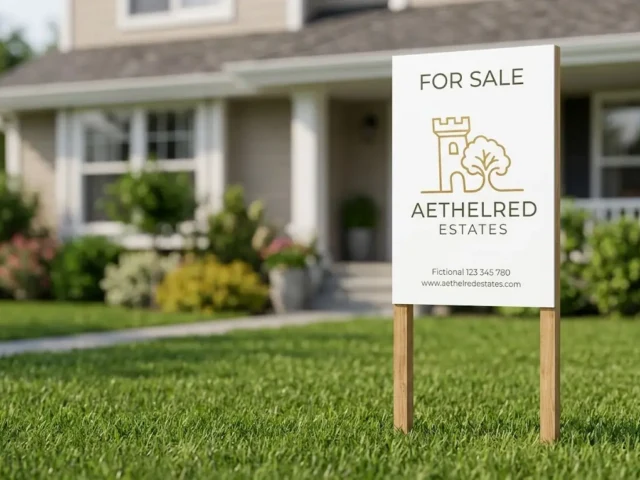
Sun, rain and wind are hard on a sign. Outdoors you want weather-resistant materials – corflute for short-term, aluminium for permanent, vinyl banners for big temporary messaging – printed with UV-stable inks that will not fade. Fixings matter too: eyelets, stakes and frames rated for the weather.
Why the Sydney climate is the real test
Two things wreck outdoor signs here, and neither is rain. The first is UV. Sydney sun is strong most of the year, and ordinary inks fade and go chalky within months – UV-stable inks are what keep colour true. The second is wind. A flat sign is a sail, and a summer southerly will flex or tear anything not properly fixed. That is why outdoor work needs both the right board and the right mounting: a large banner wants enough eyelets and rope tension to spill wind, and a rigid sign wants a frame or backing so it cannot flap. Salt air near the coast adds a third factor, and it is exactly why aluminium composite, which does not rust, earns its place on permanent jobs.
Indoor signage
Indoors, durability against weather is not an issue, so you can use lighter materials that print beautifully up close – foam board for displays and presentations, pull-up banners for events and receptions, mounted prints for foyers. The focus shifts to a clean, sharp, professional finish. Because people view indoor signage from a metre or two, the print quality and the finish do the work – a matte board with no glare under downlights reads far better than a shiny one.
Match the material to the job, not just the location
Within each environment the specific use still steers the choice. Outdoors, a real estate board or a short event run points to corflute; a permanent shopfront or car park sign points to aluminium; a grand opening or a construction hoarding points to a vinyl banner. Indoors, a trade-show or reception display points to a pull-up banner; a retail point-of-sale piece or a mounted photo points to foam board; a boardroom or foyer wall sign points to a rigid mounted print. Think about the viewing distance too: a footpath or roadside sign is read in a second from metres away, so it needs bold type and few words, while an indoor sign read up close can carry more detail. Getting this layer right is what separates a sign that does its job from one that merely exists.
The overlap
Some signs move between the two – a pull-up banner used at an outdoor event, say. For anything spending real time outdoors, choose outdoor-grade materials; for occasional, sheltered use, indoor materials are fine. A covered shopfront or an awning changes the maths again: it is technically outside but protected from direct rain and most UV, so a mid-grade material often does. When a job sits on the fence, we spec for the harder condition.
How to choose
- Full-time outdoors, permanent: aluminium composite with UV inks.
- Outdoors, short campaign: corflute or a vinyl banner.
- Indoors, close viewing: foam board or a mounted print.
- Portable, mostly indoors: a pull-up banner.
- Covered or sheltered outdoor: tell us – it often sits in between.
Common mistakes to avoid
The classic error is using an indoor board outdoors to save a little money – foam board swells and peels in the weather, and you end up reprinting. The reverse happens too: paying for heavy outdoor materials on a sign that never leaves the foyer. The other trap is ignoring fixings. An outdoor sign with no eyelets, stakes or frame is only half done, because the mounting is what lets it survive the wind.
Frequently asked questions
Can I use an indoor sign outside?
Not for long. Indoor materials like foam board are not built for sun and rain and will fail quickly. If a sign spends real time outdoors, use an outdoor-grade board.
Will an outdoor sign fade?
Not if it is printed with UV-stable inks, which is what we use for outdoor work. Standard inks fade fast in Sydney sun; the right inks hold colour for years.
What about a covered shopfront or awning?
That is a sheltered outdoor spot – protected from direct rain and most UV but still exposed to some weather. A mid-grade material usually suits. Tell us the location and we will match it.
Which lasts longer, indoor or outdoor signage?
It is about the material, not the location. A permanent aluminium sign outdoors can outlast a lightweight indoor display – each is built for its job.
See our full range of signage and banners, or get a quote.