Invoice books vs digital invoicing: which is right for your business?
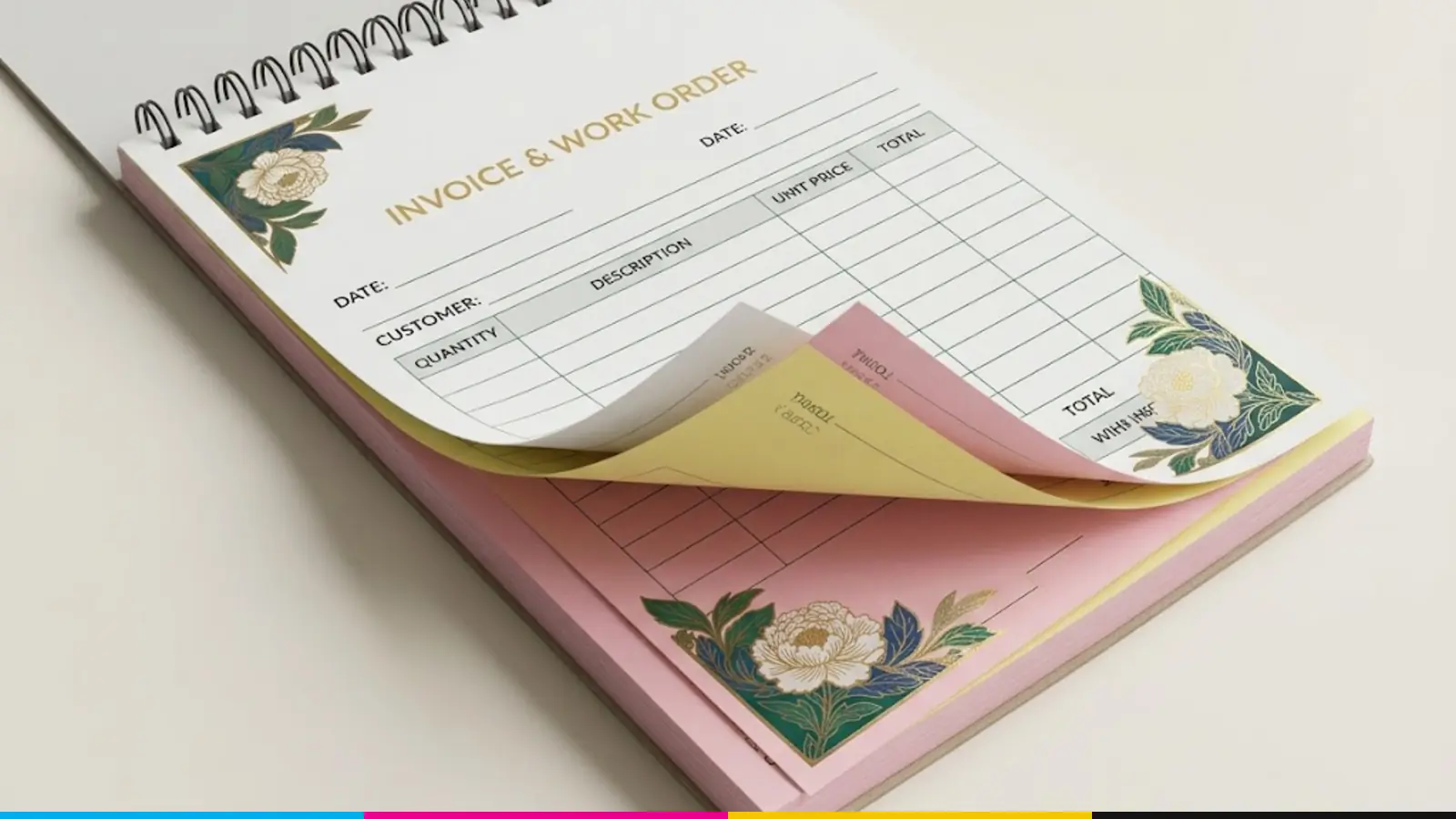
Digital invoicing suits businesses that work from an office and email invoices; a paper invoice book suits trades and mobile businesses that need to write and hand over an invoice on the spot. Plenty of businesses use both — and one does not rule out the other.
When a paper invoice book wins
If you are on a job site, at a market or doing a cash sale, a carbonless invoice book lets you write an invoice, tear off a copy for the customer, and keep one for yourself — no laptop, no signal, no app. It is instant, it looks professional, and it works when the internet does not.
The strength of paper is that it never fails at the moment you need it. A plumber finishing a job in a basement with no reception, a stallholder in a busy market, a mobile mechanic on the side of the road — none of them can wait for an app to load or a card reader to connect. A carbonless (NCR) book writes the customer’s copy and your record in one stroke, so the paperwork is done before you have packed up. Numbered pages keep the sequence tidy for your records, and a book branded with your logo, business name and ABN looks far more credible than a scrap of paper.
When digital invoicing wins
For office-based work, accounting software is great for emailing invoices, tracking payments and syncing with your books. It shines when most of your invoicing happens at a desk.
Where the work is done at a desk, software earns its keep. It emails invoices in seconds, chases overdue ones automatically, records who has paid and who has not, and feeds straight into your bookkeeping at BAS time. For a business sending dozens of invoices a week to established clients, that automation saves real hours and cuts the errors that come with re-keying numbers by hand.
Why not both?
Many trades and small businesses write a paper invoice on the spot, then enter it into their software later — the best of both. A branded invoice book keeps you looking professional in the field and gives you a physical backup.
This hybrid is how most on-the-road businesses actually run. You hand the customer a written invoice at the job so they can pay you then and there, and you transfer the details into your accounting system that evening or that week. The paper copy is your fallback if a phone dies, an app glitches or a customer disputes what was agreed — a signed, numbered page is hard to argue with. Far from being old-fashioned, a good invoice book is the reliable layer under a digital system.
Getting a compliant tax invoice either way
Whichever route you choose, an invoice has to carry the right information to count as a tax invoice in Australia. For sales that include GST that means your business name and ABN, the words “Tax invoice”, the date, a description of what was sold, and the GST amount (or a note that the total includes GST). A custom invoice book can be printed with your fixed details already on the page, so you only fill in the job — which is faster and stops you leaving out something the ATO expects. If you are not registered for GST, your invoices should not charge it, and the layout changes accordingly. We set the book up to match how your business is registered.
Common mistakes to avoid
The usual slips are leaving the ABN off, forgetting to number invoices (which makes reconciliation and record-keeping a headache), and relying on a single copy with no backup. A duplicate or triplicate book solves the last two at once. Another is treating paper and digital as rivals — the businesses that run smoothest use paper for the field and software for the books, and keep the two in sync.
Frequently asked questions
Is a handwritten invoice legally valid in Australia?
Yes. A handwritten invoice is perfectly valid as long as it includes the required details — your business name, ABN, the date, a description, and the GST information where relevant. The format matters less than the information on it.
What is the difference between duplicate and triplicate books?
A duplicate book gives you two copies of each invoice (one for the customer, one for you); a triplicate gives three (handy when a copy also goes to the office or an accounts file). Both use carbonless paper so a single write-through creates every copy.
Can I put my ABN and logo on the book?
Yes — that is the point of a custom book. We print your business name, ABN, logo and any fixed terms straight onto every page, so each invoice looks professional and is quicker to fill in.
Do I still need paper if I use accounting software?
Only if you invoice away from a desk or want a reliable backup. Many businesses keep a book in the van or at the counter for on-the-spot jobs and use software for everything invoiced from the office.
See our custom invoice book printing or get a quote.