Saddle-stitch vs perfect binding: which is right for your booklet?
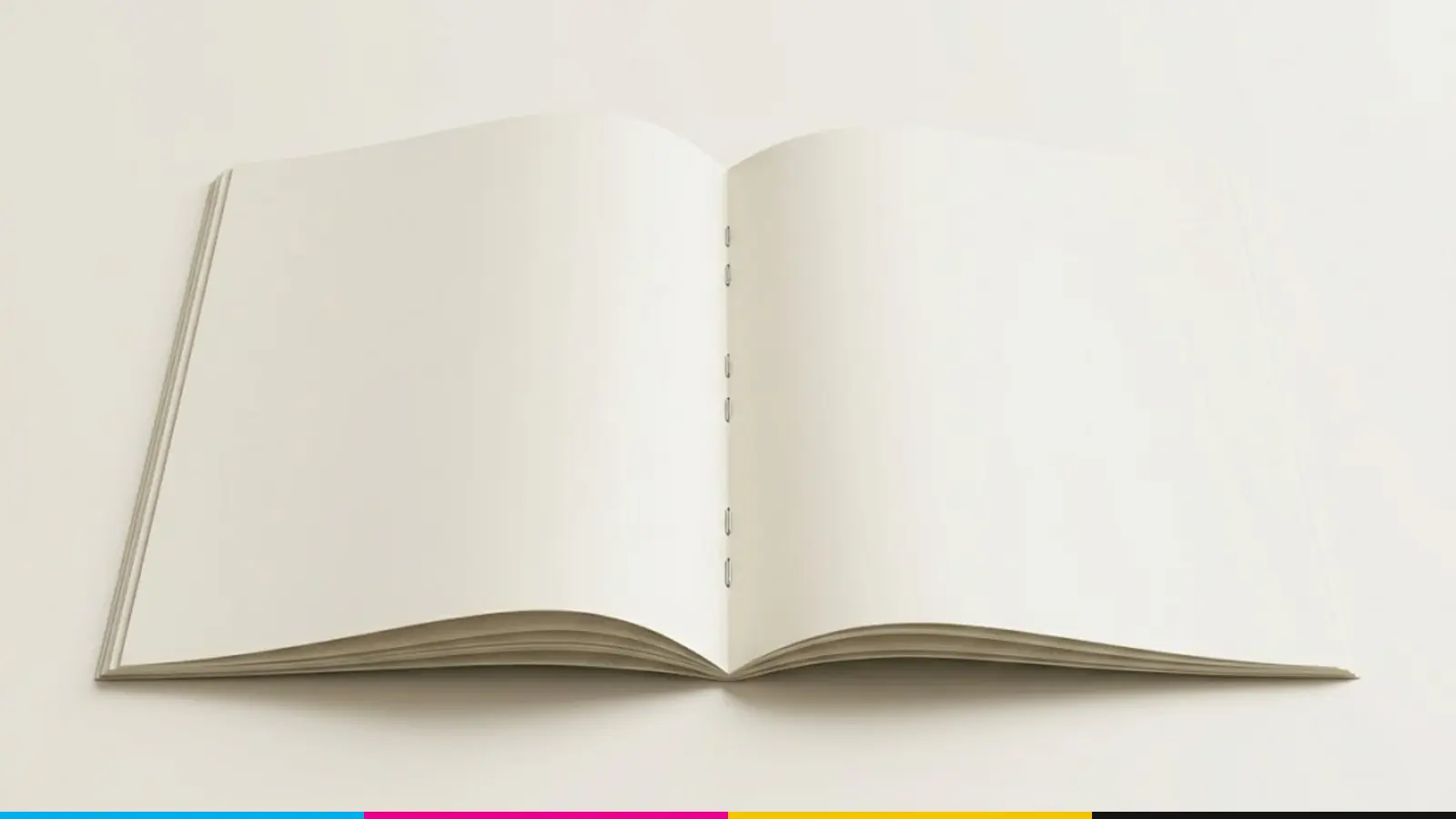
Choose saddle-stitching for booklets up to around 48 pages, and perfect binding for thicker books or when you want a flat, printable spine. Both are common, affordable ways to bind a booklet — the right one comes down to page count and the look you are after.
Saddle-stitch binding
Folded sheets are stapled through the spine (the “saddle” is the frame the sheets sit astride on the binding machine). It is neat, economical and lies reasonably flat, which makes it the go-to for programs, catalogues, menus, newsletters and short reports. The practical limit is around 48 pages — beyond that the booklet starts to bow and the inner pages creep past the edge when trimmed. Because there is no spine thickness, saddle-stitch is also the cheapest to produce and the fastest to turn around.
Perfect binding
Pages are gathered and glued into a wrap-around cover, giving you a flat printed spine like a paperback. It handles far more pages and looks more premium, so it suits thicker catalogues, manuals, annual reports, portfolios and books. It needs a minimum thickness (roughly 40+ pages) for the glue to grip, and the printed spine means you can put a title on it — useful for anything that lives on a shelf. The trade-off is a slightly higher cost and a longer turnaround, because the glue needs time to cure.
How the two compare
- Page count: saddle-stitch up to ~48 pages; perfect binding from ~40 pages up to several hundred.
- Spine: saddle-stitch has none; perfect binding gives a flat, printable spine.
- Cost: saddle-stitch is the more economical of the two.
- Lay-flat: saddle-stitch opens flatter on the page; perfect-bound books resist lying open.
- Feel: perfect binding reads as more premium and durable.
How to choose
Start with the page count, because it often makes the decision for you. Under 48 pages, saddle-stitch is almost always the right call — cheaper, quicker and perfectly professional. Over about 60 pages, perfect binding is really your only sensible option. In the 40–60 page overlap, think about how the booklet is used: a menu that gets opened flat and handled daily leans saddle-stitch, while a corporate report that sits on a desk and needs a spine title leans perfect bound. Remember saddle-stitch page counts must divide by four, since each folded sheet is four pages.
A worked example
Say you are producing a 32-page restaurant menu for a Sydney venue. Saddle-stitch is ideal: it is under the page limit, it opens flat on the table, and it is the most economical way to reprint when the menu changes each season. Now take a 96-page property portfolio for the same client — that wants perfect binding, so it looks substantial, carries a title on the spine, and survives being passed around at inspections.
Other binding options
Saddle-stitch and perfect binding cover most jobs, but two others are worth knowing. Wiro (wire-o) and coil binding thread a spiral through punched holes, so the booklet opens completely flat and folds back on itself — ideal for manuals, workbooks, recipe books and anything you write in or prop open on a bench. PUR perfect binding uses an upgraded glue that grips far better than standard, which suits coated stocks and books that get heavy daily use. If your project needs to lie dead flat or survive constant handling, these are worth asking about.
What drives the cost
There is no flat price for binding — it depends on the page count, the quantity, the paper and the finishing. More pages and heavier stock cost more to print and bind; larger runs bring the per-copy cost down. Perfect binding carries a setup for the glued cover that saddle-stitch does not, so for very short runs saddle-stitch is usually the more economical route. Send us the page count, quantity and how the booklet will be used and we will quote it.
Binding FAQ
Can you bind on coated or laminated stock?
Yes. For glued spines on coated or laminated covers we use PUR glue, which grips those smoother surfaces far better than standard adhesive.
Can a booklet lie completely flat?
Saddle-stitch opens the flattest of the two standard methods. If you need it to sit dead flat and stay open — a recipe book or a music score — ask us about wiro (coil) binding as an alternative.
Does the page count have to be exact?
For saddle-stitch, yes — it must be a multiple of four. Perfect binding is more forgiving, though very thin or very thick jobs have limits we will flag.
Which is cheaper?
Saddle-stitch, in almost every case. Cost is driven by page count, quantity, paper and finishing rather than a fixed price, so send us the details for a quote.
Can I get a printed title on the spine?
Only with perfect binding — saddle-stitch has no spine to print on.
Not sure which your project needs? Tell us the page count and how the booklet will be used and we will recommend one. See our booklet printing page or get a quote.